WAP Concept
The problem
When dbt rebuilds a model, it replaces the table in-place. If the run fails halfway through, or if a data quality test catches an issue after the fact, bad data has already reached production.
The solution: Write-Audit-Publish (WAP)
WAP solves this by separating the build schema from the production (or exposition) schema:
┌─────────────────────────────────────────────────────┐
│                    staging schema                   │
│                                                     │
│   dbt run/build → models materialized here first    │
│   dbt tests     → run against staging               │
└──────────────────────┬──────────────────────────────┘
                       │ tests pass
                       ▼
┌─────────────────────────────────────────────────────┐
│                     prod schema                     │
│                                                     │
│   wap_deploy → atomic clone/copy from staging       │
│   consumers  → always see last known-good state     │
└─────────────────────────────────────────────────────┘
If any test fails, the publish step is skipped for that model. Production is never touched, which means no bad data are discovered by users.
Per-model granularity
WAP operates at the model level.
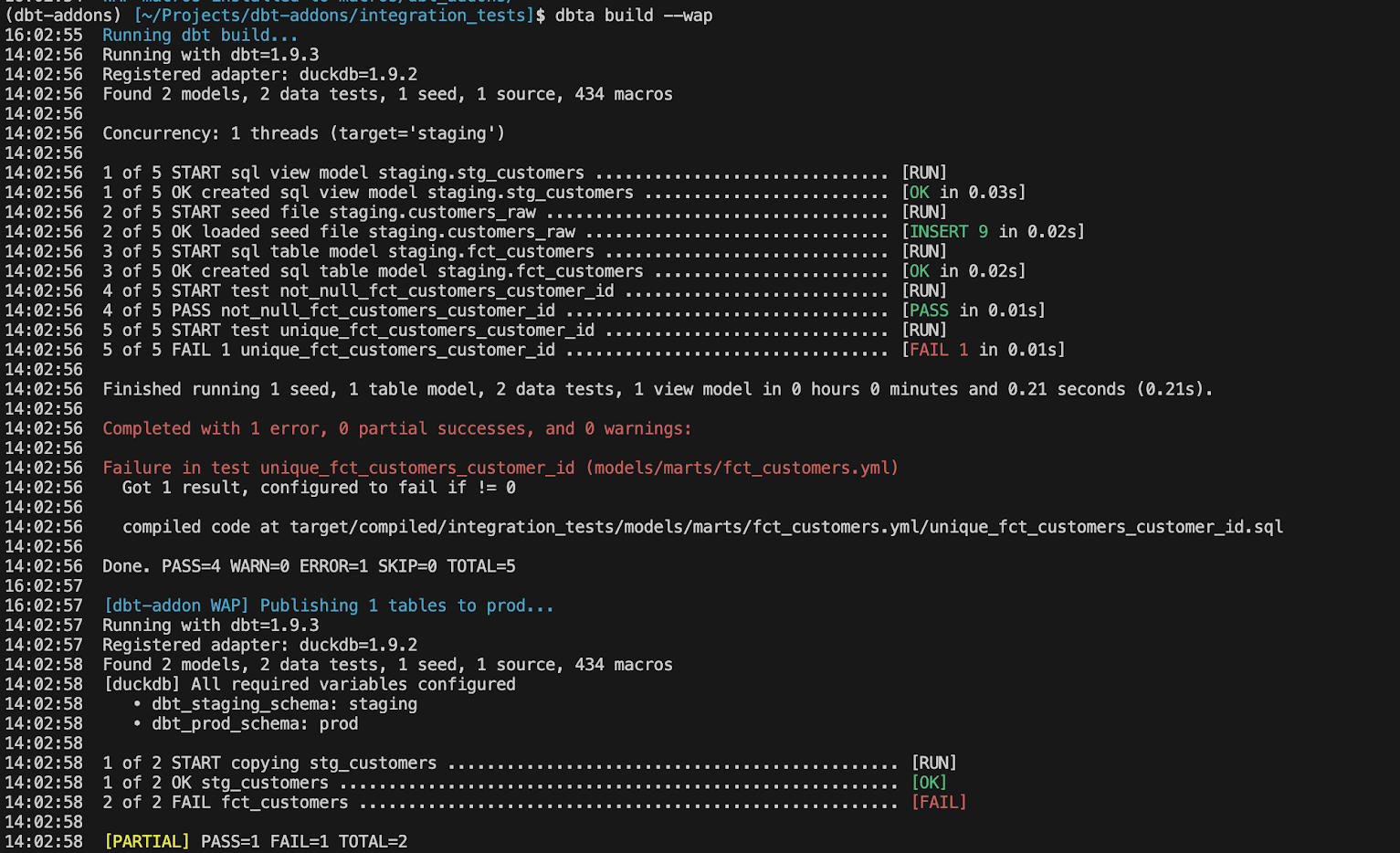
For instance, if stg_customers passes all its tests but fct_customers fails, only stg_customers is promoted.
The CLI reports which models were promoted and which were skipped. For instance: